Opening Scenario
Your CTO is on a call with a client who signed a six-figure contract. The client asks about the dashboard feature promised for Q2. The CTO glances at Slack. Nothing. Checks Jira. The ticket is open. Assigned to someone. Status: “In Progress”. It has been “In Progress” for 11 weeks. No one flagged it. No one escalated it. And the engineer is assigned to? They left the company in March. This is not a story about bad developers. This is a story about what enterprise software delivery looks like when ownership is assumed rather than assigned — and what happens when the assumptions quietly collapse.
The Delay Everybody Talks About vs. The One That’s Actually Happening
When features ship late, the instinct is to point at the engineering team. Too slow. Too many bugs. Not enough capacity. But spend time inside enterprise delivery pipelines — really inside them, not reading the Confluence summary — and a different picture emerges. The problems are structural. They live in the gaps between teams, not within any team.The Handoff No-Man ’s-Land
Features get built. Features get tested (sort of). Features reach a point where they need one final review from security, or a sign-off from a VP, or a configuration change from the infrastructure team — and then they stop. Not because they’re broken. Because nobody has the explicit authority to push them forward. Consider what happened at Delta Air Lines following the CrowdStrike incident in July 2024. Delta’s recovery took significantly longer than other affected airlines — not because their engineers were less capable, but because the accountability chain for critical system decisions was unclear. Delta later filed a $500 million lawsuit. The outcome hinged on who owned the decision.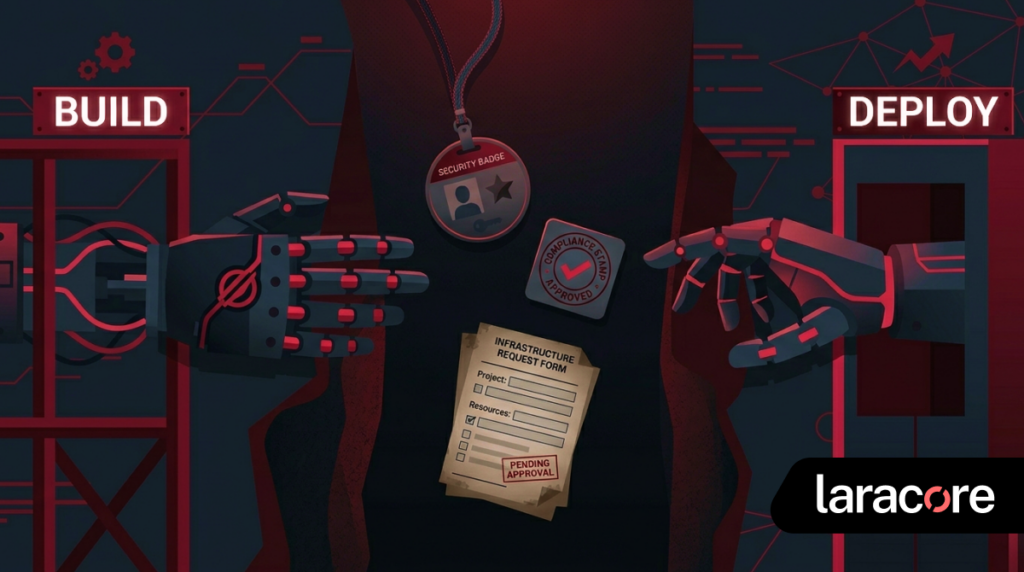
The Scope That Creeps While Nobody’s Watching
Scope creep rarely announces itself. It arrives as a reasonable-sounding request: Can we add one more integration before we go live? Can we just wait for the new compliance requirement so we can handle both at once? Each ask sounds sensible. The accumulation is a delivery calendar that’s 6 months behind before anyone runs the numbers.The Testing Bottleneck Nobody Built a Process For
When the development team commits code on Monday and doesn’t see it in a test environment until Thursday, critical context has already evaporated. The engineer who wrote that service has mentally moved on. When a bug surfaces, the debugging time doubles — not because the fix is hard, but because reconstruction takes time. This isn’t a people problem. It’s a process architecture problem.The Ownership Gap: What It Actually Looks Like in Practice
There’s a specific flavor of delay that enterprise teams rarely diagnose correctly, because it’s invisible on a sprint board. Call it the Orphaned Feature Problem. Features cluster around predictable failure moments: — Security review handoffs, where the feature waits for a team that doesn’t know it’s waiting — Infrastructure provisioning, where a request was filed but never confirmed — Legal or compliance sign-off, where the ticket was “sent over” but never formally accepted In each case, the feature isn’t blocked by a technical problem. It’s blocked by an accountability gap that no ticket field captures.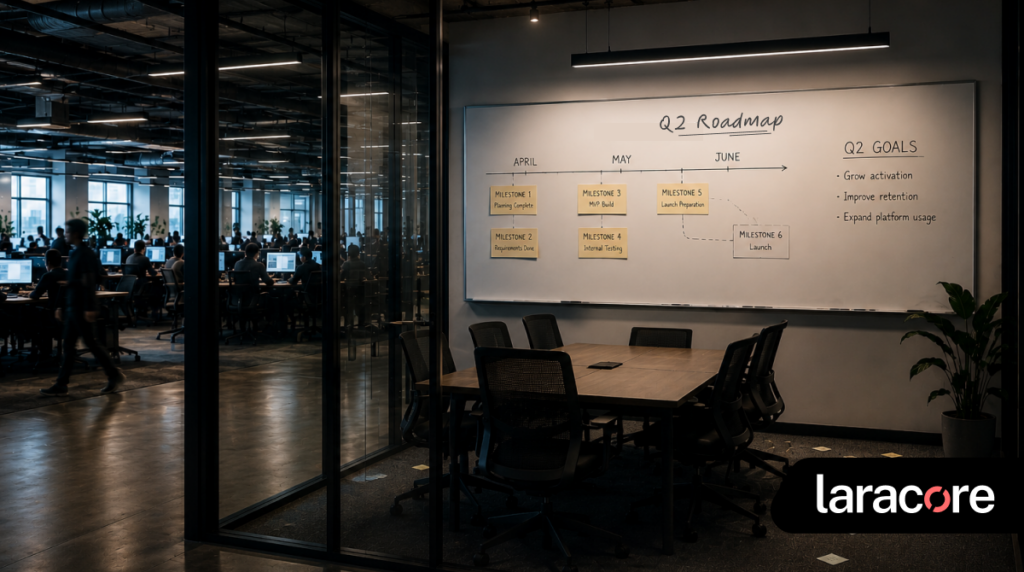
The Risky Update Paradox
When you slow down to be safe, you accumulate more changes between releases, which actually makes each release riskier. The CrowdStrike incident of July 2024 became the largest IT outage in recorded history, not because someone was reckless — but because a single configuration file was deployed to millions of machines simultaneously, with no staged rollout and no customer-side delay window. One logic error. Eight-and-a-half million systems in a boot loop. What’s telling is what Southwest Airlines reported afterward: minimal impact. Analysts pointed to their conservative update cadence. Slowness, in that specific moment, was a structural advantage. The lesson isn’t “never update.” The lesson is: risk is not binary.What Enterprise Teams Actually Need
The organizations that consistently ship features on time share four non-negotiable habits:- Explicit ownership documentation — every feature, every dependency, every approval gate has a named human accountable for forward motion. Not a team. A person.
- Staged release architecture — features move through rings: internal → select customers → broader rollout. Each ring is a checkpoint, not a ceremony.
- Feedback compression — the time between a commit and a signal from a test environment is measured in hours, not days.
- Proactive dependency visibility — blockers are surfaced before they become delays. Infrastructure requests are filed at the start of the sprint, not the end.
The Question Worth Sitting With
If you pulled up your three most delayed features right now — not in theory, in your actual sprint board — and asked who is accountable for moving these forward this week, how quickly would you get a clear answer? If the answer requires more than one person to confirm, the delay isn’t a capacity problem. It’s an ownership problem. And ownership problems don’t get solved by hiring more engineers.
Faheem Hasan
With over 12+ years of experience shaping high-performing web and Laravel platforms, Faheem brings strategic expertise and proven stability to enterprise technology environments. At Laracore, he leads the delivery of scalable, performance-driven Laravel solutions designed to support long-term growth and global business demands.
With over 12+ years of experience shaping high-performing web and Laravel platforms, Faheem brings strategic expertise and proven stability to enterprise technology environments. At Laracore, he leads the delivery of scalable, performance-driven Laravel solutions designed to support long-term growth and global business demands.